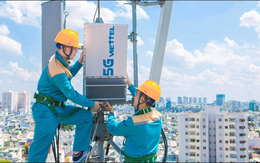


MobiFone leaders hope that Resolution 68 will soon have specific implementation guidelines so that state-owned enterprises can confidently invest in and develop new fields such as 5G, 6G, AI, and satellite internet.

Mr. Nguyễn Đình Tuấn, Deputy General Director of MobiFone Telecommunications Corporation, shared this at the Economic Forum titled “State-owned Enterprises: Enhancing Competitiveness and Leading Role” organized by VOV on November 20. He expressed the desire for a decree and detailed guidance on implementing Resolution 68 tailored to each group of enterprises, especially mechanisms that allow technology companies to make faster decisions, with leaders taking responsibility.
According to Mr. Tuấn, for state-owned enterprises like MobiFone, investments in new technologies—especially AI—require highly detailed planning and quantification for 1-year, 2-year, and 3-year milestones before being submitted for approval. However, in the tech sector, even a 6-month delay can mean falling behind, while current processes can take up to 3 years, posing a major barrier for technology companies.
“There are ideas we believe could create significant value within just one year, but it is very difficult to quantify them immediately due to a lack of sufficient data. If accountability is required, I am fully willing to take responsibility, but providing very specific justifications at this stage is not feasible,” Mr. Tuấn said.
If Resolution 68 is implemented, MobiFone leaders believe that state-owned enterprises will be “unshackled,” especially as the company plans to invest heavily in advanced 5G, 6G, and satellite systems in the coming years.

MobiFone leadership also noted that state-owned enterprises face pressure to innovate. Ten years ago, mobile users might have paid at least 500,000 VND—or even up to 1 million VND—per month, whereas today telecom services cost only around 200,000–300,000 VND. This significant drop in revenue creates strong pressure to innovate. MobiFone aims for non-telecom services to account for 50–70% of its business within the next five years.
“Innovation at MobiFone is mainly driven by digital technology and AI. In the future, all services we provide to customers will be based on AI,” Mr. Tuấn said.
Regarding AI, MobiFone leadership emphasized that investing in AI requires “AI factories,” which only large enterprises can build. MobiFone can develop digital transformation platforms, build AI factories, and provide tokens and AI applications for businesses. For example, every manufacturing company needs quality control (QC). Computer vision AI, combined with cameras, 5G, and AI factories, can handle QC tasks. Similarly, enterprise automation solutions also rely on 5G and AI.
“Regarding AI factories, such as FPT’s $200 million factory in Quy Nhơn using Nvidia chips, operating at full capacity is a major challenge and requires sufficient demand. FPT’s $200 million investment is still like a drop in the ocean compared to Vietnam’s AI needs over the next five years. It is estimated that around 100 million GPUs will be needed, and even that capacity would only meet about 10% of demand,” a MobiFone leader noted.
https://antt.nguoiduatin.vn/sep-mobifone-he-lo-cai-bat-tay-voi-starlink-cua-ty-phu-elon-musk-thang-12-nam-nay-se-co-dich-vu-ve-tinh-phuc-vu-vung-sau-vung-xa-205251121120448462.htm