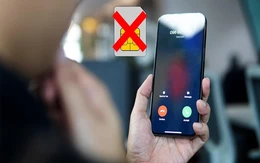


In the near future, mobile users in Vietnam will no longer see 2G and 3G networks. From 2028 onward, Vietnam will only maintain 4G and 5G networks and beyond.
Recently, telecom operators have started sending messages to subscribers using older devices, recommending that users upgrade to devices that support VoLTE voice services. Users who proactively upgrade their devices during this period may receive incentives such as free call time or subsidies when purchasing new phones.
VoLTE (Voice over LTE) is a high-quality voice service that allows users to make calls over the 4G LTE network instead of 2G or 3G. This technology provides better call audio quality, faster connection setup, and more stable performance. Notably, it also enables users to make calls while simultaneously using 4G data for internet access. If a device does not support VoLTE, it may switch back to 2G or 3G mode when making voice calls.
Following last year’s campaign to phase out 2G-only devices, this is the next step by telecom service providers to encourage users to transition to devices that no longer rely on 2G and 3G networks.
According to the Telecommunications Authority under the Ministry of Science and Technology, 2G networks in Vietnam are still being maintained to support devices that do not yet support VoLTE and to serve certain narrowband IoT services. However, Vietnam is also implementing measures to promote users’ transition to broadband internet connectivity.
The continued presence of non-VoLTE devices in the market is one of the reasons why telecom operators, despite having stopped offering 2G services, have not yet been able to completely shut down the 2G network.
The Telecommunications Authority also stated that the Ministry has set a roadmap to fully discontinue 3G technology by 2028. At that point, Vietnam will only have 4G and 5G networks.
According to a previous roadmap from the Ministry of Information and Communications (now the Ministry of Science and Technology), Vietnam plans to completely shut down 2G networks by September 2026. Phasing out 2G technology will help optimize operations and free up resources and radio frequency spectrum for newer technologies such as 4G and 5G, supporting both telecom operators’ and national development goals, and enabling citizens to access advanced digital services such as electronic payments and online public services.
VTV